Expert | Rob Gray on The Gap Between Researchers and Coaches (Part 1)
Rob Gray is an Associate Professor at Arizona State University, host of The Perception & Action Podcast, and a Skill Acquisition Specialist for the Boston Red Sox. He’s been studying movement and publishing research on it for 25 years. In this Part 1 of 2, Kris and Rob discuss the limitations and challenges of using sports science research for coaches and practitioners, as well as some ways both coaches and researchers could do it better.
EXPLORE FURTHER
Our entire movement skills resource library
Coaching for Mastery course mentioned in the episode
Follow Rob on Instagram
Check out The Perception & Action Podcast
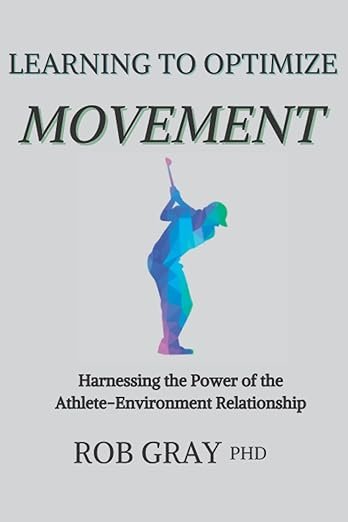
Check out Rob’s books:
SUPPORT + CONNECT
Help us keep the show sponsor-free when you join our Patreon Community for as little as $3.
Get two or more bonus episodes every month on Patreon, Spotify, or Apple.
Subscribe to THE CURRENT and get a monthly exploration of how we can all become better climbers.
Share this episode with a friend who needs to hear it.
CHAPTERS
(0:00) Intro
(1:31) Guest Introduction
(3:20) Topic Explanation
(5:18) Accessibility
(6:13) Impenetrability
(7:33) Generalizability
(8:43) ANNOTATION: Don’t Discount Small Studies
(10:49) Researchers Asking the Wrong Questions
(11:49) How to Make it User Friendly
(19:34) The Value of Case Studies
(22:19) Studies Lack Real World Variables
(24:23) ANNOTATION: Functional Movement Variability
(26:44) What is it We Should be Looking For in Studies?
(30:49) Coaches and Researchers Meeting in the Middle
(33:48) Limitations of Using Studies From Other Sports
(37:24) ANNOTATION: Constraints and Self Organization
(40:54) ”Evidence-Based” Elitism
(43:27) Wrap Up
LISTEN ON YOUR PODCAST APP OF CHOICE

We’re a proud founding member of the Plug Tone Audio Collective, a group of the best, most impactful podcasts in the outdoor industry.
Taylor Reed talks movement coaching and the role research plays in his evidence-informed coaching methods.
Rob Gray discusses two theories of skill acquisition and how climbing coaches can use them to help climbers better learn to move.
Skill Acquisition Specialist Rob Gray discusses the limitations of using sports science research for coaches and practitioners.
How to use data to inform training decisions had been a topic of debate amongst the Power Company coaches for years, until Data Analyst, Dale Wilson, stepped in to settle the score once and for all.
Are chalking up and shaking out helpful? Or just habits? And is just reading a research paper’s abstract enough to go on?
Examining a study that collected measurements from 55 women, what does the data say about today’s female climbers?
Can the measurement of contributing energy systems act as climbing performance indicators?
Kris and Paul discuss a paper from the International Rock Climbing Research Association that introduces and assesses a battery of ten tests designed specifically to measure climbing performance.
How does the male/female performance gap in climbing compare to those in sprinting and distance running?
The International Rock Climbing Research Association seeks to bring uniformity to how rock climbing research is collected and presented.
Kris and Paul discuss the process they use to choose and read research papers, both for Breaking Beta and for their own interests as climbers and coaches.
Paul and Kris discuss statistics and their significance with data analyst and fellow Power Company coach, Dale Wilson.
Using science to inform climbing training is becoming increasingly popular, and for good reason. Leading that charge is Dr. Tyler Nelson of Camp 4 Human Performance.
Researcher, coach, and climber Eva Lopez discusses the reactions to her research about finger strength.
Ryan Gagnon brings data-driven research and infectious enthusiasm to his programs built to introduce and engage minority youth in climbing.
Salt Lake climber and coach Steve Maisch had some of the first assessments I remember seeing online, and we go into how he's added, subtracted, and refined those.
A climber since 1994, Kris was a traddie for 12 years before he discovered the gymnastic movement inherent in sport climbing and bouldering. Through dedicated training and practice, he eventually built to ascents of 5.14 and V11.
Kris started Power Company Climbing in 2006 as a place to share training info with his friends, and still specializes in working with full time "regular" folks. He's always available for coaching sessions and training workshops.
Kris and Paul dig into a paper that presents and then tests a method for measuring movement skills in sport climbing.