
The Key To Your Hardest Ever Climb

The title of this blog post isn’t clickbait. I finally have a deeper understanding of a concept that we’ve all heard a million times, and I really do believe it to be a key of sorts that can open new levels. But to connect these dots, I’m first going to have to show you how I collected them.
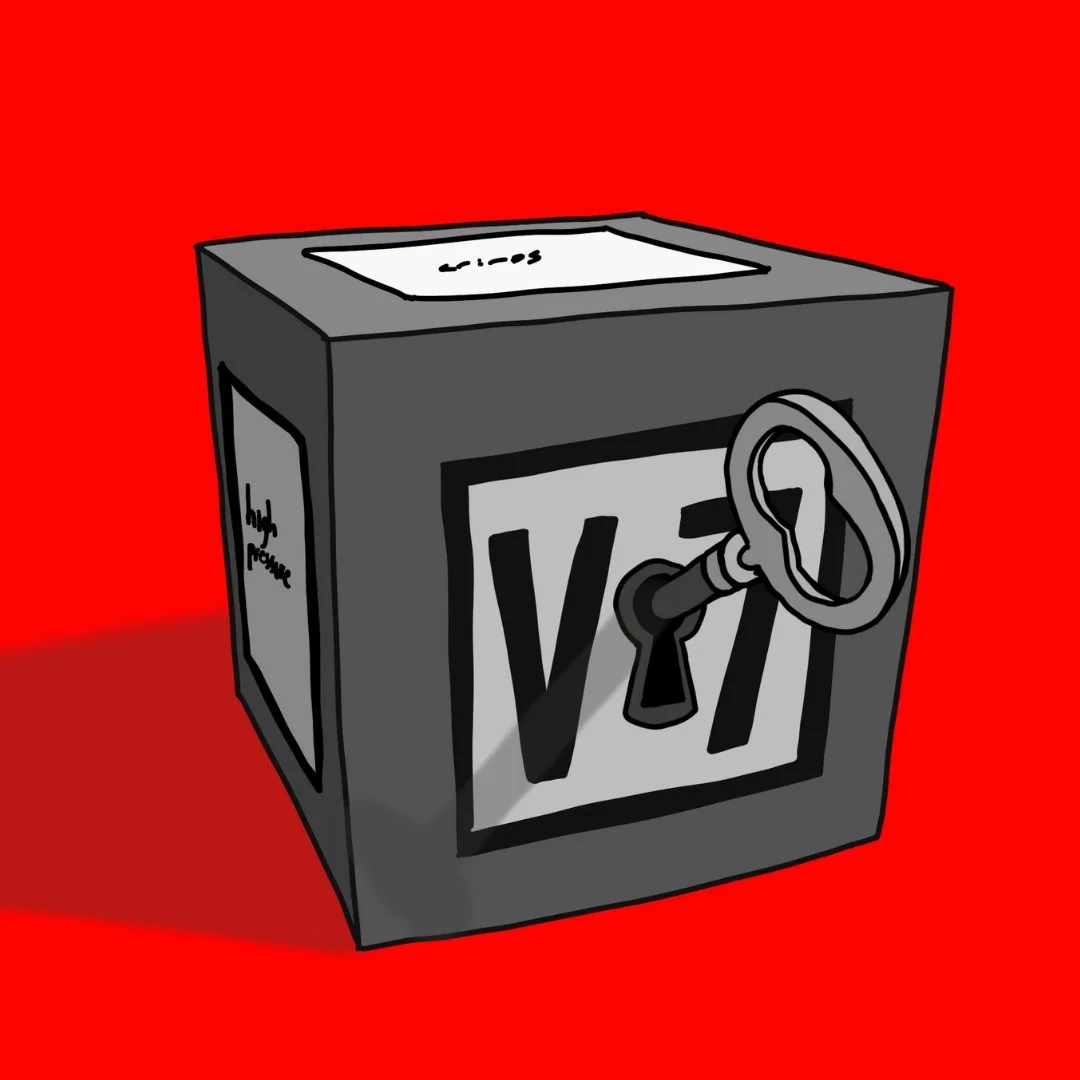
KEYS.
This dot is more of a question. During a recent Board Meeting episode, The Mindset Shifts That Led Us To V10, I suggested that V7 was the key to finally climbing in the V10 grade regularly. I hadn’t spent much time considering why, just that it was. To my surprise, Nate had the same thing in his notes.
Not V9. V7. Why? How?
CALIBRATION.
A couple of days later I recorded an episode with Lauren Abernathy and Caitlyn Holmes for The Average Climber Podcast. Lauren has been climbing in Little Cottonwood and finding the style challenging, and wanted to talk through it. In the episode I suggested that the reason it’s so hard to switch from other rock types to polished granite is that we don’t have many opportunities to keep those skills calibrated. Most rock types and gyms provide far more friction, so the pressure needed to stand on the smears or hold the slopers seems foreign. Research shows that the calibration of skills can degrade extremely quickly, particularly if you haven’t reached some level of what we might call “mastery.” Even when it’s a skill you practice regularly, a small change can seem like a big difference. Imagine borrowing a car and having a hard time for a few blocks with the touchy brake pedal. Then you get back in your own car and have the same trouble recalibrating. Even though this is a basic skill you rarely have to think about.
EXPLORATION VS. EXPLOITATION.
In that same podcast episode, I suggested to Lauren that her best bet would be to mix up the exploration and exploitation. At lower grades, particularly if they feel harder than they should, we get to spend more time exploring. Trying things and isolating the variables. However, our best performances are usually the opposite — exploiting the skills we already have an understanding of, while the difficulty is such that a small variable can make a big difference. Most of us complain about a little extra humidity because when the climbing is really hard, we’re tuned into those variables.
COMPENSATION.
I also suggested to Lauren that while at the lower grades, she might be able to compensate for what she’s finding difficult. For instance, the smears are bad, so she might just be able to pull harder. Or when the sloper feels terrible, she might be able to grab a tiny crimp to bump past it. But that she SHOULDN’T do that.
When exploiting, yes, do it — whatever you can to send. When exploring, lean into the thing that is challenging. Explore it.
Lately, when I’ve seen a few dots that I can connect or I’ve developed interesting questions, I get on a mic and talk through it for the Patrons. I’ve been calling those “Connect The Dots Freestyles”, and there are several on our Patreon now.
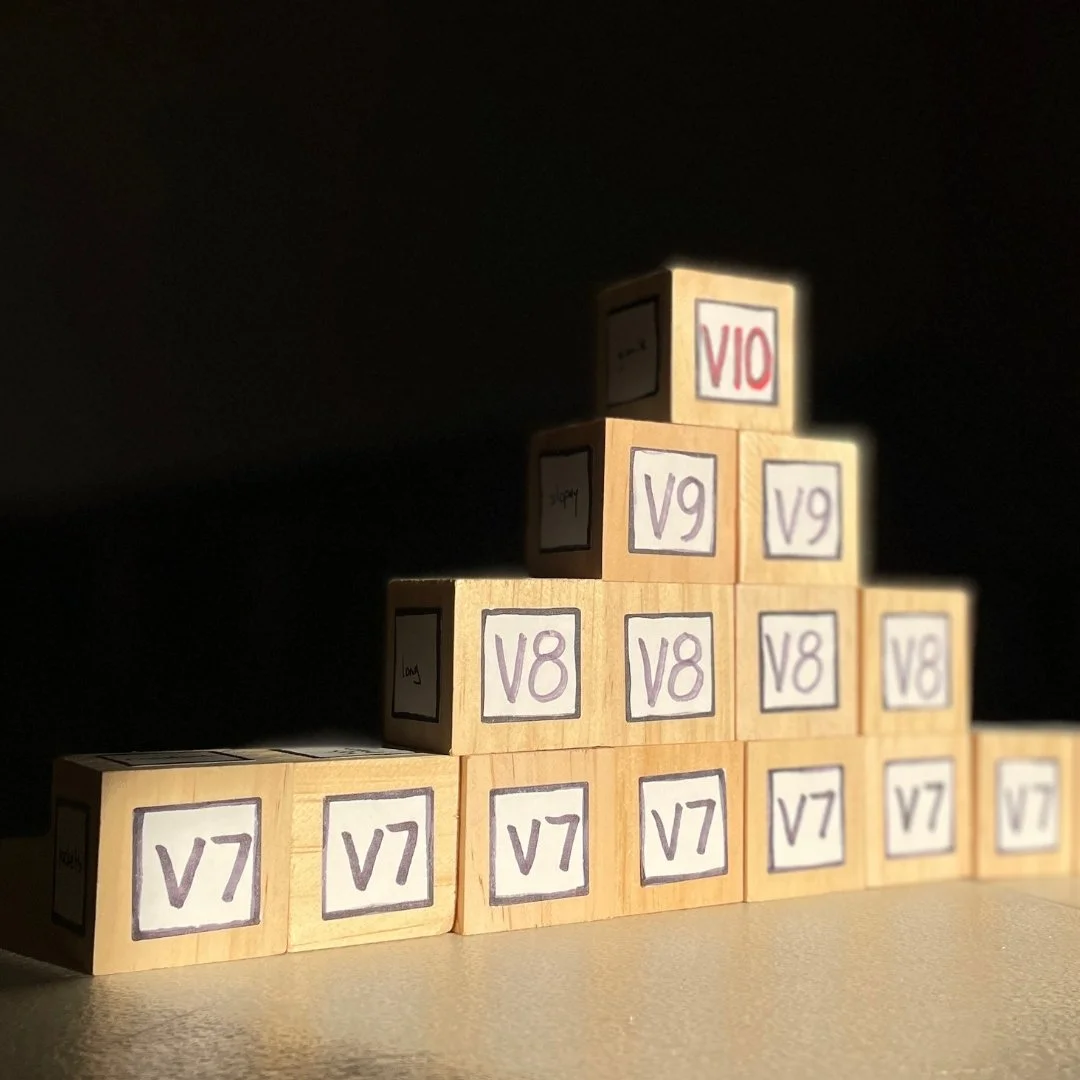
For this one, I connected the above dots together to explain how some people can travel to any area and any rock type and climb roughly the same grade. Even in areas that have a reputation of being sandbagged, this holds true. They do that by building a big base. The old idea of the grade pyramid.
SPEAKING OF PATRON PODCAST EPISODES…
I recently moved our first 100 patron only episodes into a FREE membership tier. If you aren’t already a patron and you’re headed out on a fall trip, go join for free and check out some of those bonus episodes.
Once you’re in, go to the “Collections” section and you’ll find a free bonus episode collection so that you don’t have to scroll back. If you’re on Spotify, you can connect your account and they’ll show up there as well.
However, this pyramid is only a piece of the story. And I still felt like there was something missing between exploration and exploitation.
So I kept digging.
I started working on a video script about the idea of V7 being the key to V10, and while making props for the video, everything slid into place.
First, there IS a step between exploration and exploitation, and in this scenario, V7 falls into that zone.
Expansion.
We explore to find brand new scenarios and techniques and movements and grips and rock types and more. We do that mostly at an even lower level of the pyramid. V4 or V5 in this case. Yes, that can extend into V7 as well, or whatever your 4 level pyramid “base” is.
But at the next level up, we are expanding those new skills we just discovered during exploration. We are applying them to new grip types and rock types and in different conditions or in front of a crowd. We are recalibrating, over and over. We are inching these skills closer to exploitation, which happens most often in the top few rows of our pyramid.
Lauren, if you’re reading this, add that to my suggestion. Explore, Expand, Exploit.
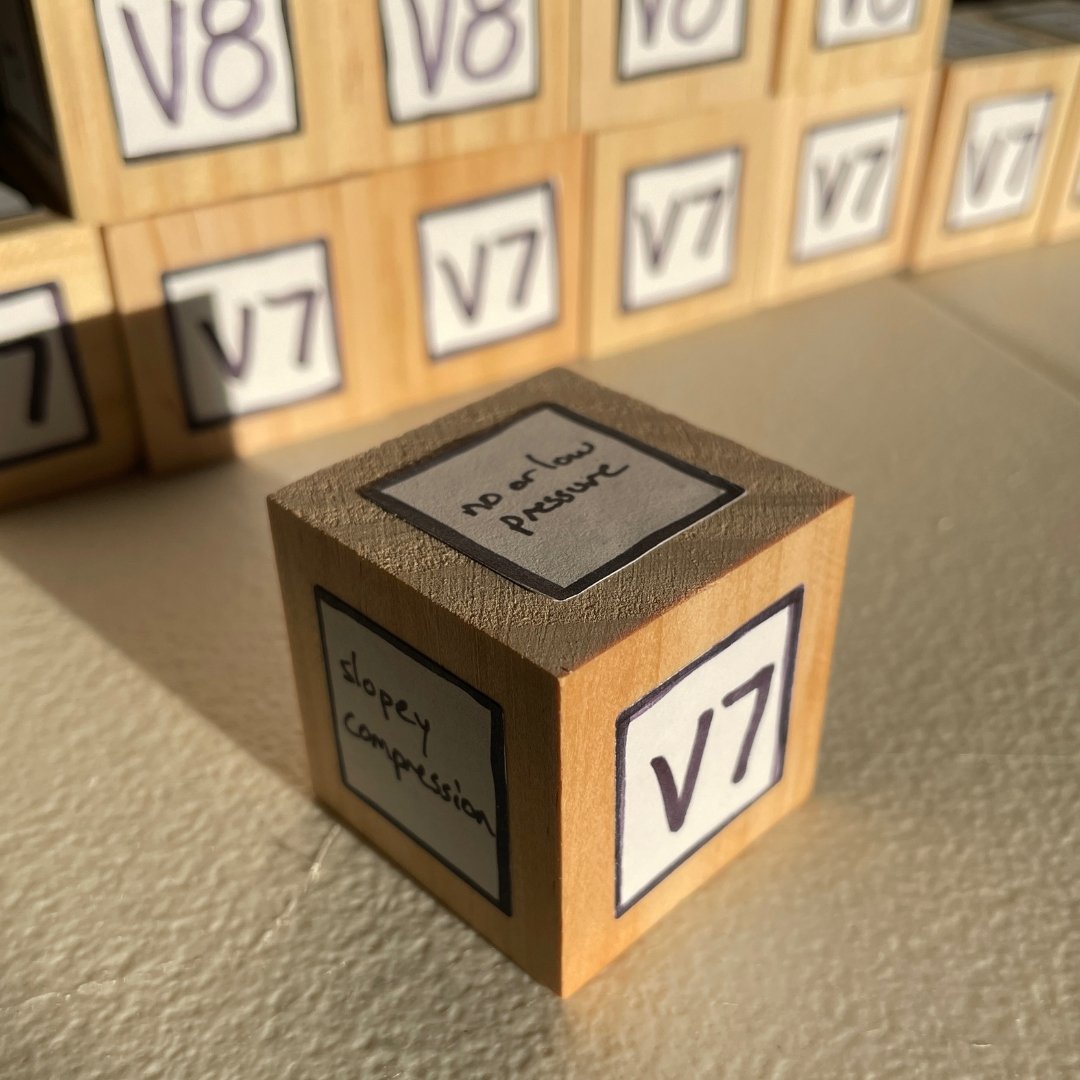
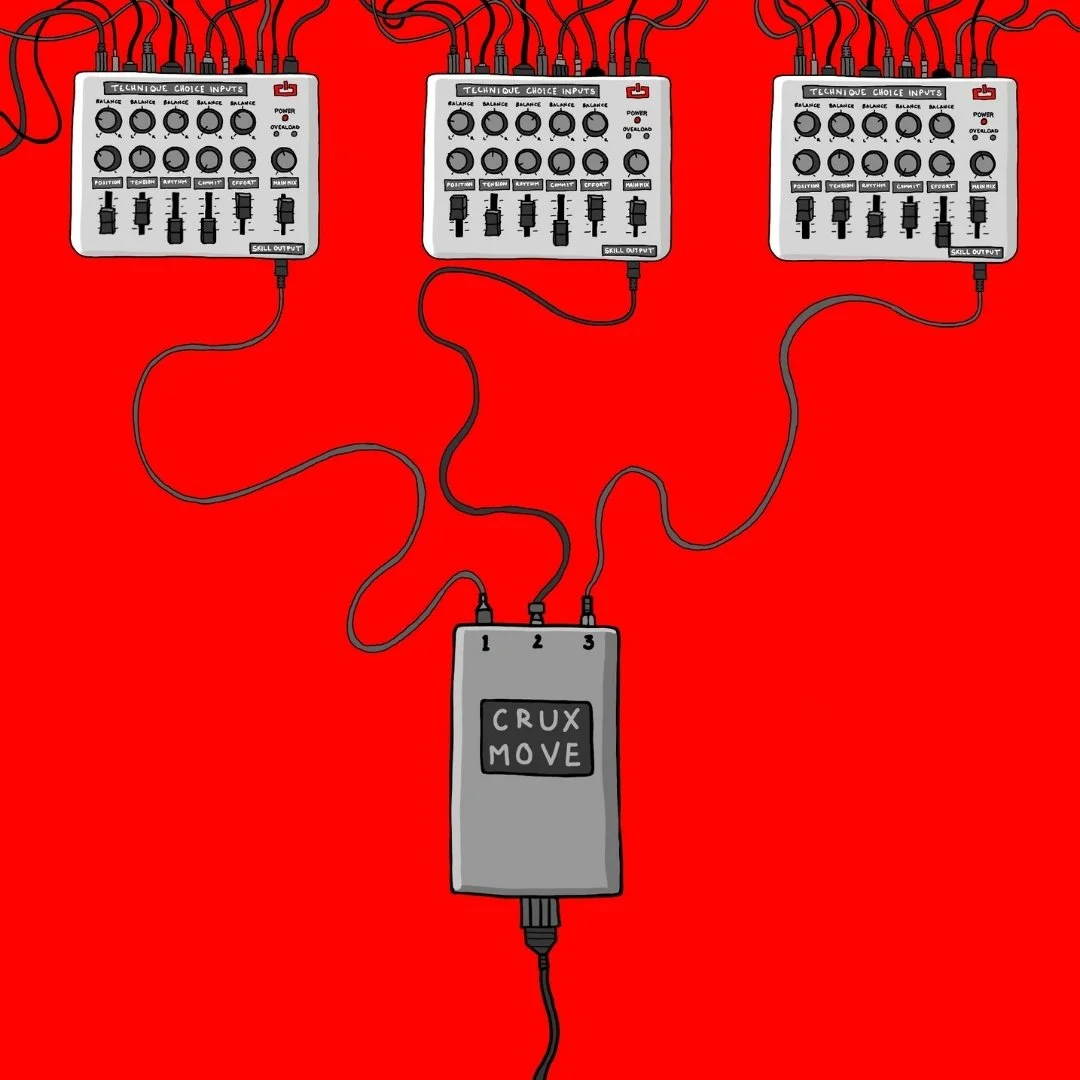
Then when actually making my V7 blocks, I realized the missing part of the story. These blocks are multifaceted. The grade is only one facet.
If you collect enough variety (enough expansion) at this level, by doing a wide variety of blocs (is that too on the nose? blocs, blocks?) in a variety of environments and scenarios — technical crimps and slopey compression, pinchy roofs and friction slabs, high pressure and low pressure, intensive effort and extensive effort, humid heat and dry cold, granite and sandstone — then THAT is the key to the top of your pyramid.
In fact, I’m literally just realizing at this exact moment that this was the subject of a recent YouTube video we made in which Alex Megos admits to me that he was wrong about conditions, and I make the case that maybe he was actually right.
To continue playing devil’s advocate, and to further this metaphor further than I should, you can absolutely force entry into the top level. You can break in. You don’t NEED the key. But as soon as you’re in, the locks are likely to be changed, putting you back at square one.
Learn. Grow. Excel.
– Kris
Related Things to Stay Current:
That YouTube video using these blocks will be out soon. Subscribe so you don’t miss it.
I also recently made a video about why it’s hard to transition between sport climbing and bouldering and the session you can do to take the sting off.
If you haven’t yet, check out the FREE Try Harder Toolkit.
Don’t forget! If you aren’t on the email list for THE CURRENT, you won’t get the email next month. Make sure you’re subscribed HERE.
OH!! One more thing: My first climbing history book is now out into the world, adapted from Season 1 of Written in Stone!
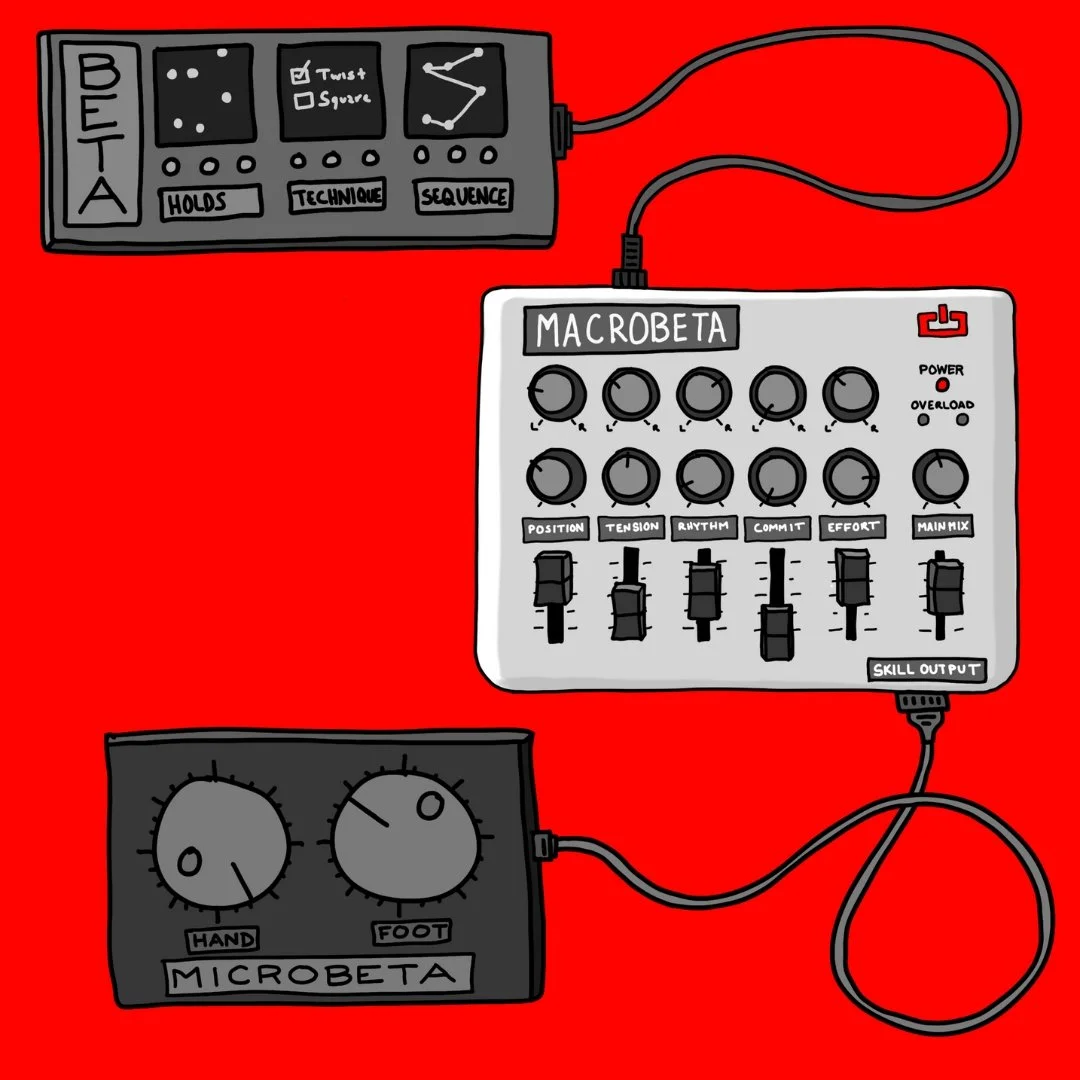







Maybe not. As always, it depends.