
Board Meetings | How Nate Assesses Climbing Movement Skills and How You Can Self-Assess
This episode is available exclusively to our Patrons and Apple+ Subscribers! To listen:
It’s the million dollar question: How do we decide where to focus our efforts when it comes to becoming a BETTER climber – rather than just a stronger one?
In this subscribers-only Board Meeting, Kris puts Nate in the hot seat and asks all about his process for movement assessments. They then try to translate what Nate does to help inform how you might better learn to assess your own movement skills.
EXPLORE FURTHER
You might enjoy these related articles, episodes, and other resources:
Our Movement Practice Resource Page
BREAKING BETA | Can We Accurately Assess the Movement Skills of Sport Climbers?
BOARD MEETINGS | Systematic Tactics vs. Battle Mode
BOARD MEETINGS | Is It a Weakness or Is It Just Hard?
Adam Ondra Lords of Trad video
SUPPORT + CONNECT
Help us keep the show sponsor-free when you join our Patreon Community for as little as $3.
Get two or more bonus episodes every month on Patreon, Spotify, or Apple.
Subscribe to THE CURRENT and get a monthly exploration of how we can all become better climbers.
Find Nate on Instagram and YouTube.
Find Power Company on Instagram and YouTube.
Share this episode with a friend who needs to hear it.
CHAPTERS
(0:00) Intro
(1:09) Topic Description
(7:43) Where Nate Starts When Assessing Movement
(9:46) Coaches Often Feel the Need to “Do Something”
(11:24) Observe and Take Notes
(12:23) 3 Considerations: Are You Aware? Can You Do It Well? Do You Use It?
(14:32) Ask Tangential Questions
(15:56) Look for Underlying Issues
(17:00) Better Climbers are Better at Compensating (Cheat Codes)
(21:20) What Are the Common Themes You Look For (Goldilocks Zones)
(25:28) The Stories We Tell Ourselves
(26:54) Everything Is Limiting (Relative and Absolute Skill)
(28:19) Healthy and Unhealthy Comparisons
(39:35) Call the Destination
(41:00) Judge Where You’re At (Filling Gaps)
(47:22) Adaptability Is the Most Important Skill
(48:25) The Front Flag Fallacy
(51:20) Skill Begets More Skill Begets Adaptability
(56:05) What are the Wide Lens Goals?
(1:00:34) What Part of a Move Do You Usually Fail On?
(1:05:55) What’s the Hardest Part About Sending Your Top Grade?
(1:07:47) What Movement Style Do You Value?
(1:10:02) Video and Observation
(1:15:15) Pay a Coach
(1:17:03) Wrap Up
(1:18:01) Theme Song
LISTEN ON YOUR PODCAST APP OF CHOICE




We’re a proud founding member of the Plug Tone Audio Collective, a group of the best, most impactful podcasts in the outdoor industry.

If a lot of your climbing is done outdoors, it might make sense to use some of that time for training rather than performance.

When should you be growing your skill set and when should you be focused on one aspect of it?

Which is better – building a grade pyramid or a tower – and how might one or the other impact your future climbing?
How can we make sure we are getting the right thing – quality or quantity – in our climbing?
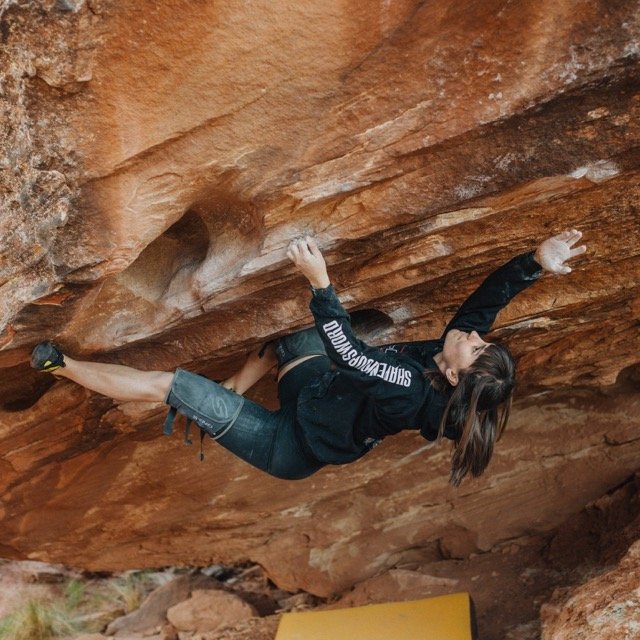
There's a fine line between reactive and proactive training. If you're constantly being corrective or reactive, you may want to rethink things.
Kris and Nate discuss their favorite protocols, both that they use themselves and in programming for their clients.
Kris presents his idea of the Atomic Elements of Climbing Movement to Nate and asks for his thoughts.
If we want to assess our climbing movement skills over time, are the standardized boards the best option? We're conflicted…
How do we decide where to focus our efforts when it comes to becoming a BETTER climber – rather than just a stronger one?
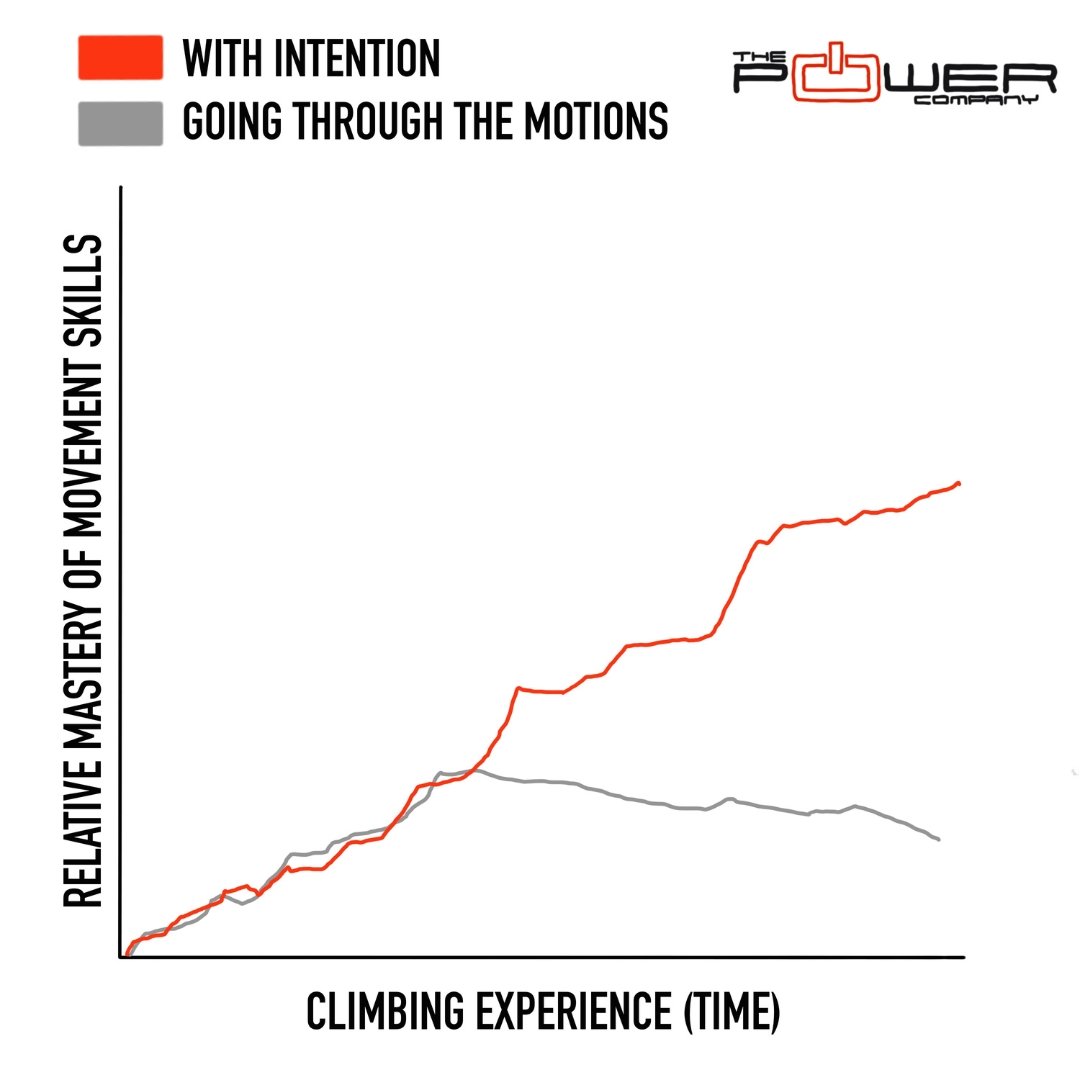
If the more you climb, the better you get, then why do we all know that one guy that’s been climbing forever and still stuck at 5.10?
One of our favorites: Kris and Nate discuss ideas about our mental models for learning, and how we might apply these ideas to climbing.

There are lessons from the climbing in a gym that should absolutely be applied outdoors in order to become a better climber faster.
There are aspects of climbing outside that lead us into learning specific things that we don't necessarily find as easily indoors.

With more and more information out there, it would seem that we can learn faster and better. But that isn't always the case.



In an ideal world, grades would be objective and we’d have some universal formula for how they’re decided. But we don't live in an ideal world.
Watching Will Bosi and Aiden Roberts work on the Burden of Dreams replica is fun, but is it valuable for the rest of us?
A way to think about improvement based on ideas from Josh Waitzkin, author of The Art of Learning.

It would be amazing if we kept all our attributes forever, but the reality is that we sometimes stop doing some of the things that made us good to begin with.

The interwebs are going crazy over Andrew Bisharat’s new miracle hangboard program “Five Minute Fingers” and folks have asked for our opinion.
Whether it's mental or physical, unless you're a mutant, you've gotten stuck. Well, we have some advice.

Jon Glassberg recently wrote in a blog that, “Climbing double digits is an attainable goal for any serious climber.” We agree.
 Kris Hampton
A climber since 1994, Kris was a traddie for 12 years before he discovered the gymnastic movement inherent in sport climbing and bouldering. Through dedicated training and practice, he eventually built to ascents of 5.14 and V11.
Kris started Power Company Climbing in 2006 as a place to share training info with his friends, and still specializes in working with full time "regular" folks. He's always available for coaching sessions and training workshops.
We are rarely in a position to take advantage of what we're physically capable of if we can’t shift our mindsets.