
Tactics | Should You Try to Climb It Better?

It’s tactics season, which means I’m spending a wild amount of time thinking and rethinking the tactical approach to climbing. While I’m driving, doing Turkish Getups, in the shower, and when I should be responding to emails.
Last week, I realized I hadn’t answered an important question:
What is the goal of approaching a climb tactically?
Is it to climb it better or to climb it faster?
It seems simple, but I had to do some mental gymnastics to sort out what I believe is the answer. So as I’ve done quite a bit recently, I sat down in front of a microphone and recorded a stream of thought episode for the patrons — a “Connect the Dots Freestyle” episode.
While talking it out (and through some conversation in the comments afterward — thanks JPC for the thought provoking questions), I realized that the answer is closely connected to a different climbing improvement debate: practice vs. performance.
But first, the answer itself:
The goal should be to climb the thing sooner, not better.
I know some of you just scoffed. Good. I hope you did. I essentially did the same to myself when I considered this answer.
“Of course you want to climb it better! That will actually lead to climbing it sooner!”
Well, yes and no. I’ve seen enough people take the concept of climbing it better to an extreme to know that isn’t always the case. From my perspective, it’s one of the biggest mistakes climbers make when projecting. They find a comfortable process that gets them to a point where falling is unlikely, and then they give a redpoint attempt. They send, then repeat on the next route.
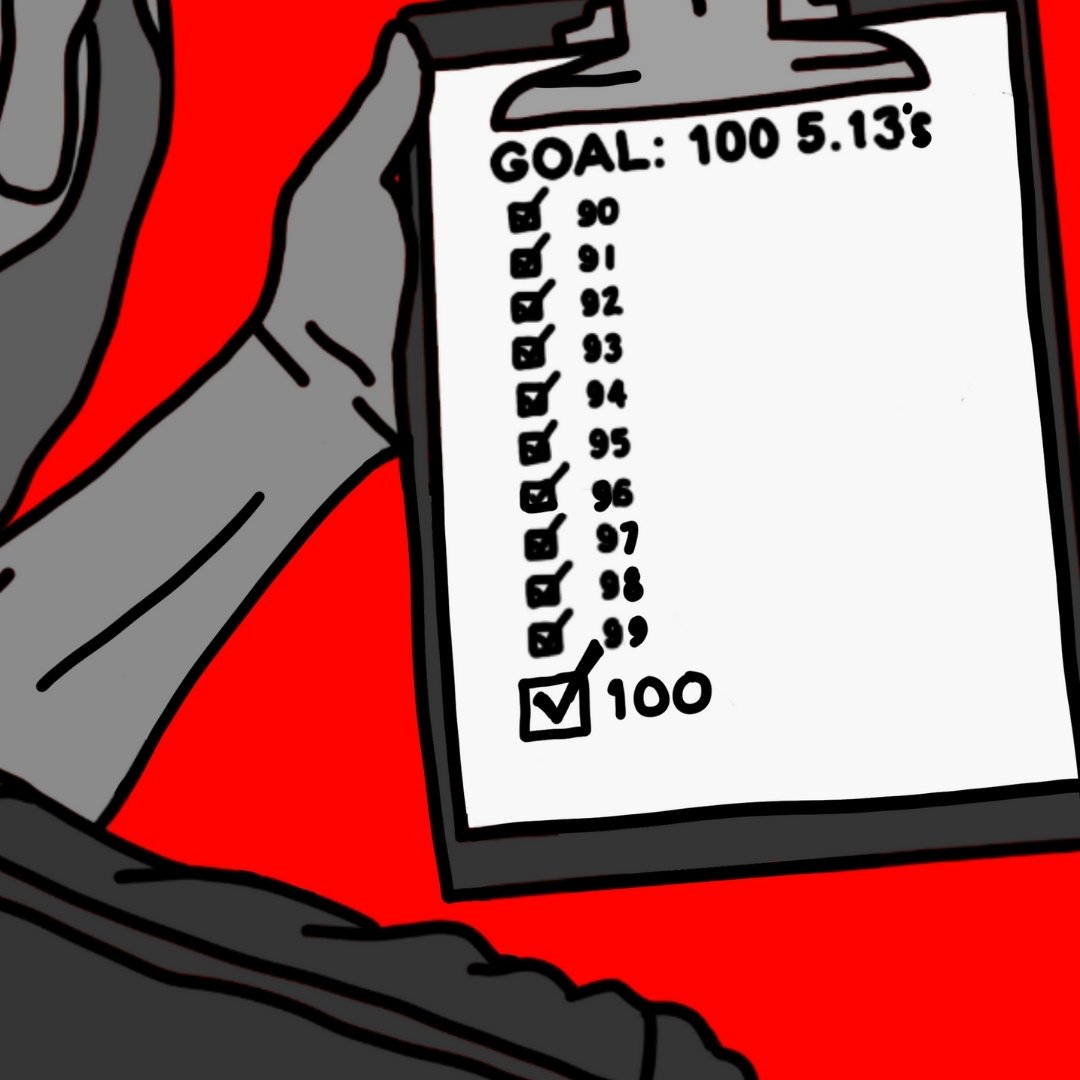
And they never challenge their comfort level within their process. If that first route took 2 sessions of toproping before being ready to go bolt to bolt for 2 sessions, then that becomes the pattern for nearly every route thereafter.
But they could have done most of those routes faster. Which means doing more routes. Which means increasing their adaptability. Which means becoming a better climber.
“But, but…. sometimes you have to make a section better to be able to send.”
Exactly. If the goal is to send (performance), then you only need to make a section better if it’s in service of the send. If the goal is not to send, but to improve your climbing in some way (practice), then by all means, work that section for as long as you want to.
“Can’t you just do both?”
Not really. If you’re in the performance process, then making a section better than it needs to be is simply an inefficient process. I know that sounds harsh, but it’s true.
“So you’re saying we shouldn’t try to make things better?”
No. There’s an easy solution to this. If you haven’t done the climb before, try to send as soon as possible. Regularly test your readiness by giving high point attempts. You may discover that even though you could still further iron out those three sections, you didn’t need to. Or you may find that you thought you were ready to send, but you weren’t even close. Approach it like a scientist, and look at each attempt as data. Gathering that data will help you streamline your process in the future. Then once you’ve sent, feel entirely free to go back and make it better.
If you don’t like that idea, it’s likely you were lingering not because you wanted to make the climbing better, but because you didn’t want to leave your comfort zone.
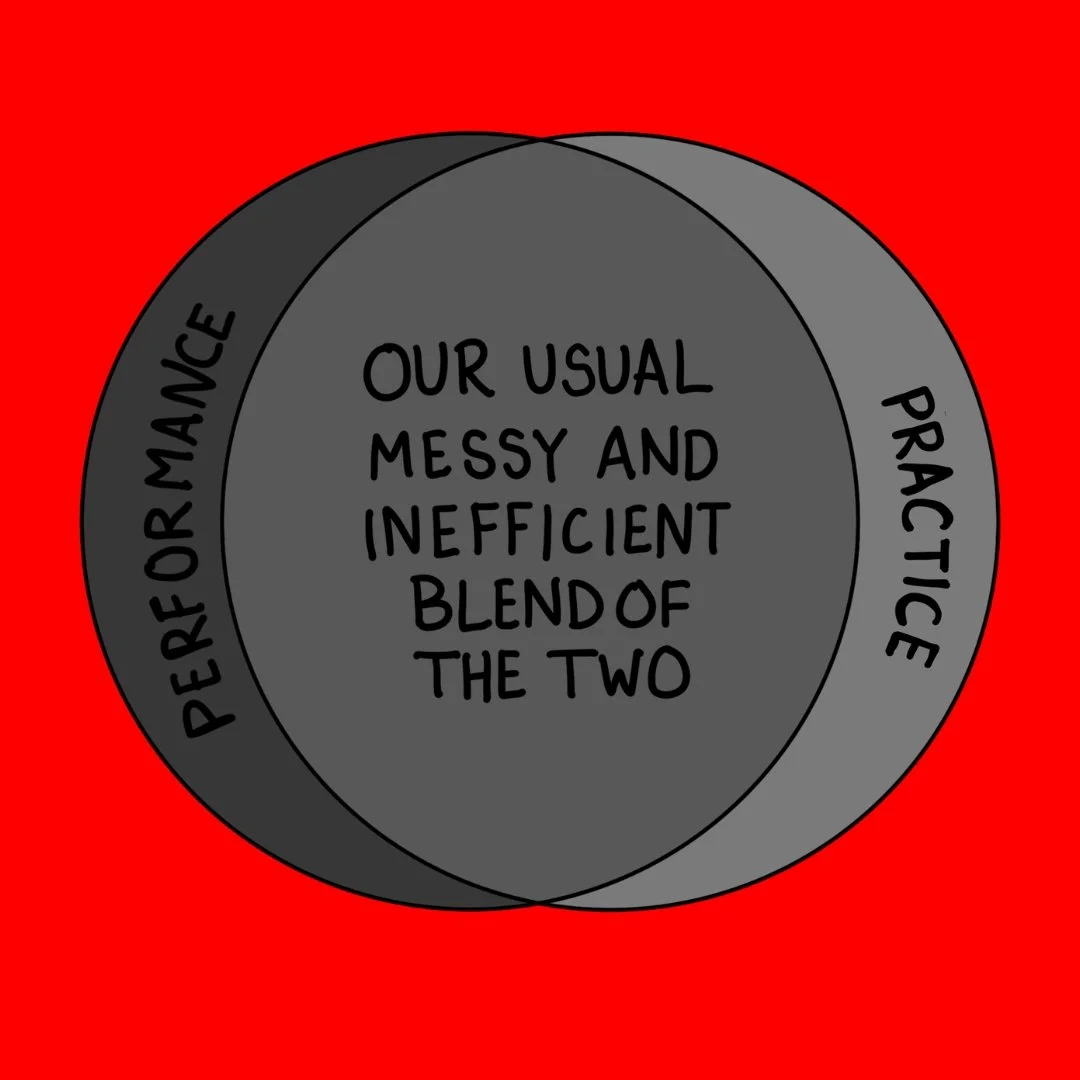
Essentially, if you are performing, tactics should always be in service of sending sooner.
The problem is that the “practice and performance of climbing” Venn Diagram is wildly overlapping.
We want to climb well, and that can easily morph into practice.
We also want to send, even when we’re practicing, and that quickly takes on all the characteristics of performance.
Particularly in this world where seasonality has been passed over in favor of trying to always be training, always be sending, and always be improving, that Venn Diagram might just be a single circle. I don’t think it should be.
“So does it even matter?”
I think it does. What we choose will shift the timeline of our improvement. If we can somehow keep the two separate more often, we stand to make progress faster.
If we practice on the moves that we can actually gain something from rather than doing the 15 other moves over and over while chasing a send, our practice is more efficient.
If we send on our third session instead of our fifth session, simply because we didn’t spend unnecessary time dialing in a sequence we could fight through the one time we need, then our performance process becomes more efficient.
It may only be a few percentage points better than the blended practice and performance model that most of us default to, but it’s certainly better.
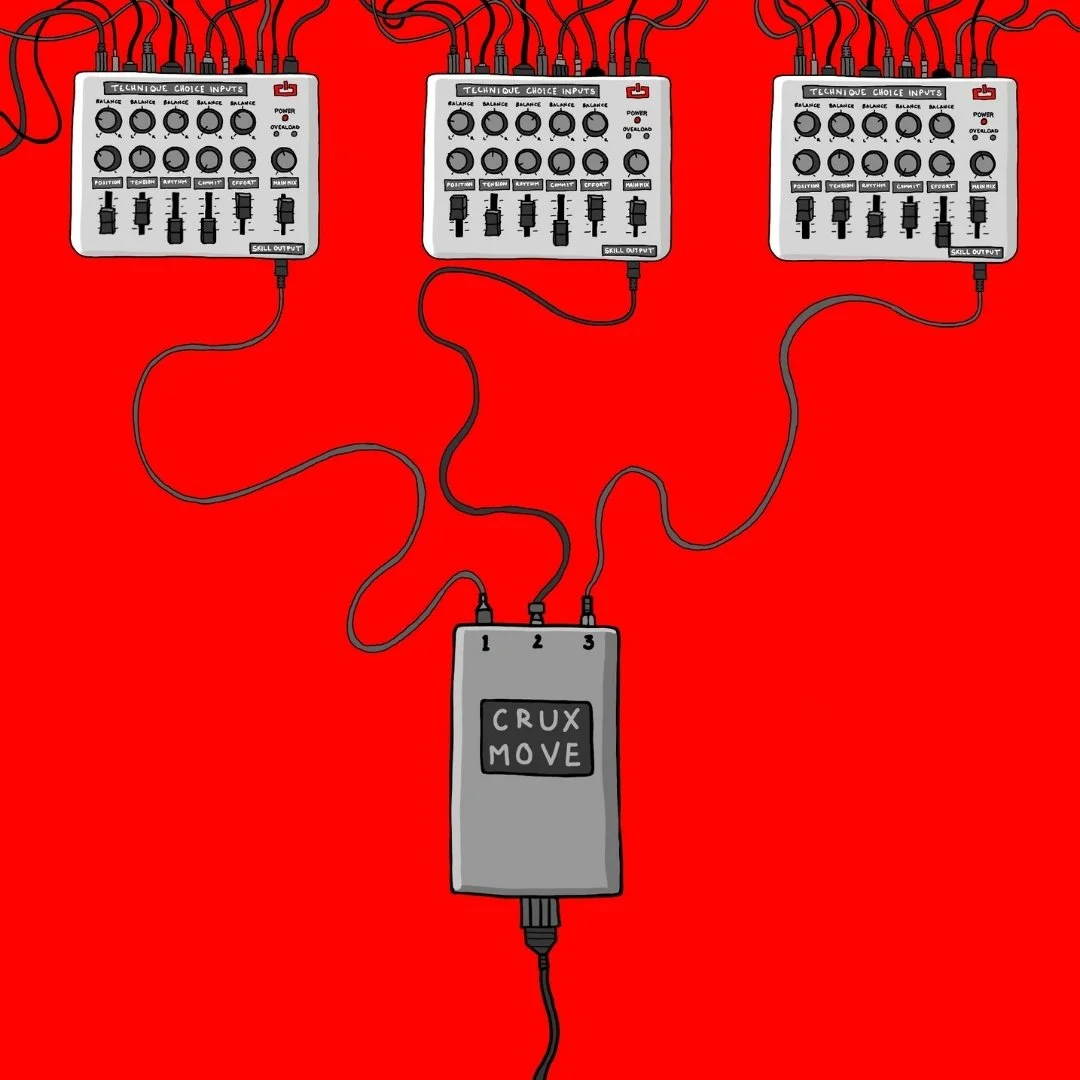
So step one, before applying any other tactic, should always be to make a decision before leaving the ground.
Is this performance, or is this practice?
Learn. Grow. Excel.
– Kris
Related Things to Stay Current:
Just yesterday I dropped a new conversation with Juliet Hammer onto the podcast feed. I knew that I needed to stress test my thoughts on grades with someone who doesn’t fit right into the middle of “average size”. Juliet has been doing her own experiments on grades as well, and has a fantastic approach. Listen to the entire episode on the pod, and shorter YouTube videos will be coming soon.
Those shorter videos with Juliet will make it onto my “A Better Way To Look At Climbing Grades” video playlist. Check it out if you haven’t.
I recently put out a video detailing what I believe is the simplest way to keep improving at climbing. Three sessions you can cycle through that will cover all the bases. I’ll be dropping a more detailed video for each of the three sessions soon.
Season 3 of Written in Stone will be kicking off soon. We’re diving into the history of bouldering. Subscribe if you haven’t!
I recently moved our first 100 patron only episodes into a FREE membership tier. No strings attached. Once you’re in, go to the “Collections” section and you’ll find a free bonus episode collection so that you don’t have to scroll back. If you’re on Spotify, you can connect your account and they’ll show up there as well.
Don’t forget! If you aren’t on the email list for THE CURRENT, you won’t get the email next month. Make sure you’re subscribed HERE.








Maybe not. As always, it depends.